
Abortion Facility Database
ANSIRH's Abortion Facility Database is an online map and data resource that contains information on over 950 abortion facilities in the United States. This database serves as a tool to facilitate high-quality research on abortion provision, and provides a picture of the abortion clinic landscape at the state, regional, and national levels.
Map: Abortion Facilities by State
Each year, the Abortion Facility Database research team collects data for all facilities in the database from the prior year, identifies any changes in services (including closures), and adds facilities that have newly begun to offer abortion care. They generate data from publicly available sources online and conduct mystery shopper phone calls to facilities.
The database is available to researchers and journalists upon reasonable request through a formal approval process.
View the Trends in Abortion Services in the United States, 2017-2023 report.
Reporting on Trends: Abortion Facilities in the United States and Services Offered
Since 2022, the Abortion Facility Database team has published summary reports on abortion facility trends and services across the United States.
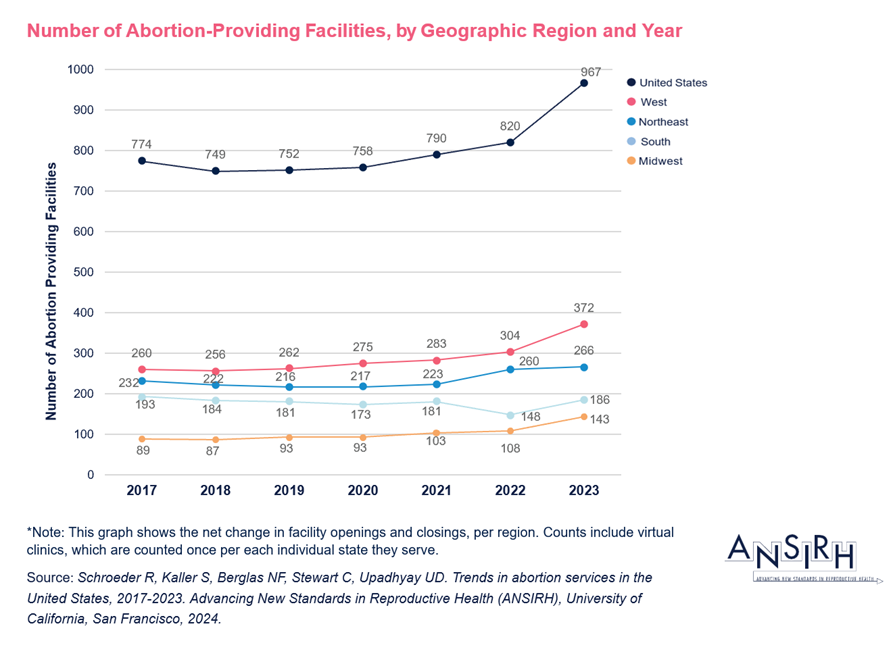
In the latest report—which includes data since 2017, well before the overturning of Roe v. Wade—the total number of abortion-providing facilities in the United States fluctuated over time but grew in 2022 and 2023. In 2023, we captured 967 facilities that were open and publicly advertising abortion services, an increase from 774 facilities in 2017. We captured a large increase in the overall number of facilities in 2023 compared to the pre-Dobbs period. This increase was largely due to the introduction of new virtual clinics in 2022 and 2023, which led to a net increase of facilities that outpaced previous years.
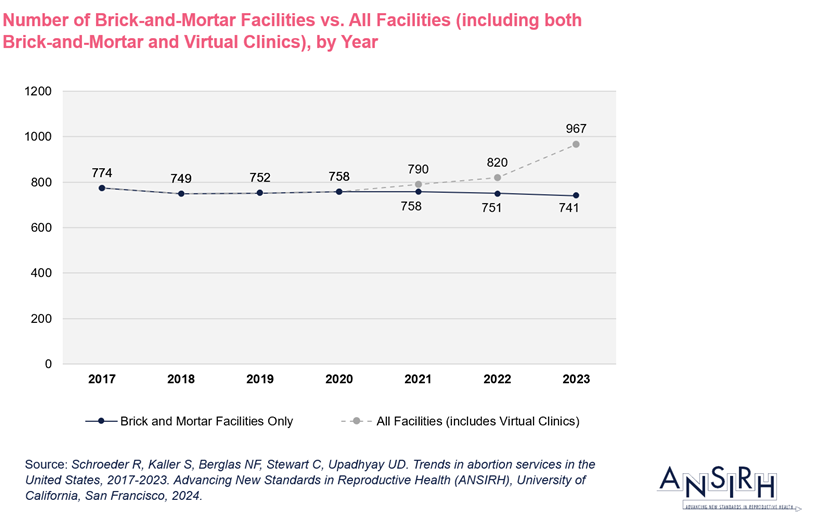
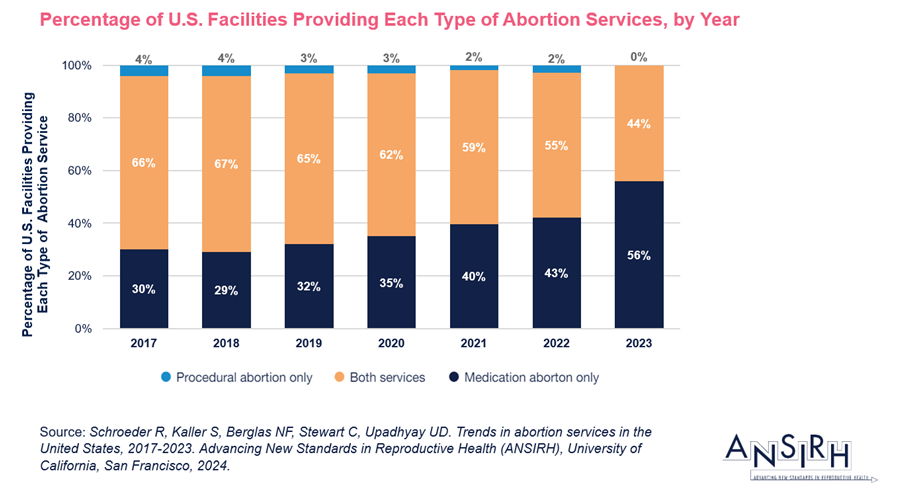
Between 2017-2023, the number of abortion clinics in the U.S. that offered only medication abortion services increased substantially. Much of this change can be attributed to the opening of many new medication abortion-only virtual clinics throughout the U.S. At the same time, the number of facilities providing procedural abortion services decreased, which further limits abortion access for pregnant people seeking abortion services later in pregnancy.
View the Trends in Abortion Services in the United States, 2017-2023 report.
View the Trends in Abortion Services in the United States, 2017-2021 report.
Self-pay Costs and Insurance Accepted
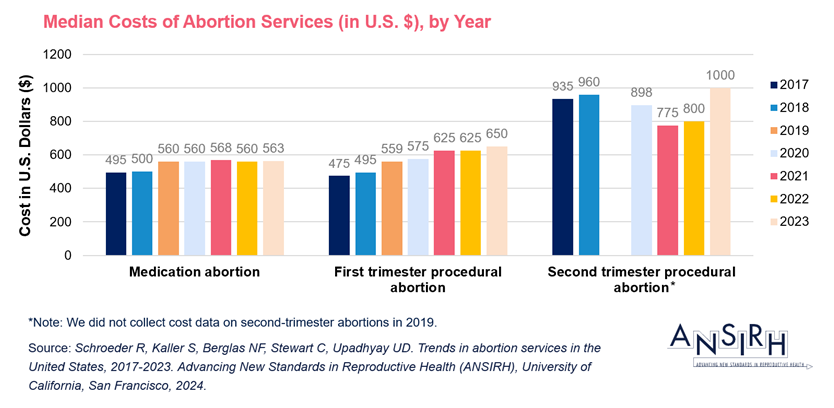
In 2023, the median self-pay cost for abortion services in the U.S. was $563 for medication abortion, $650 for first-trimester procedural abortion, and $1,000 for second-trimester abortion services. (Learn more about the pricing of medication abortion in the U.S., for both virtual and brick-and-mortar clinics, from 2021-2023.) Median national costs for medication abortion, first-trimester procedural abortion, and second-trimester procedural abortion all increased between 2017-2023. Given that the majority of abortion patients are low income, current prices across the U.S. may put abortion out of reach for many in need of these health services.
The Impact of Dobbs on Abortion Clinics: Gestational Limits
In June 2023, one year after the Supreme Court overturned Roe v. Wade, the Abortion Facility Database research team released findings on how abortion facilities have responded to the decision: “Trends in Abortion Facility Gestational Limits Pre- and Post-Dobbs” and “Availability of Telehealth Services for Medication Abortion in the U.S., 2020-2022.”
Further findings from the latest trends report found that the median gestational limit for medication abortion throughout the U.S. remained stable at 10 weeks from 2017-2022 but increased to 11 weeks in all regions in 2023. Currently, the FDA has approved medication abortion for use up to 10 weeks, but clinicians are able to legally prescribe mifepristone beyond that limit based on clinical evidence that it is effective at later gestations. Evidence supports its use up to 13 weeks of pregnancy.
The median gestational limit for procedural abortion for U.S. facilities decreased from 18 weeks of pregnancy in 2017 to 16 weeks in 2023. Gestational limits for procedural abortion among individual facilities varied, even when accounting for state gestational limits. While abortion-related gestational limits are primarily determined by state law, an individual facility may further reduce its own gestational limit based on provider training, provider comfort, clinic scheduling, anesthesia availability, and availability of equipment.
Monitoring the Current Abortion Care Landscape
ANSIRH’s trends report demonstrates that abortion care looks dramatically different in states that have broad and legal access to abortion compared to states that do not, and these differences have only become more pronounced in recent years. State policy changes have also impacted the types of abortion services clinics are allowed to provide, how far in pregnancy services are offered, and cost and insurance coverage for those services. Such differences have resulted in major disparities in abortion access across the country, which are shaped by policies that are not based in scientific evidence.
The Abortion Facility Database research team will continue to monitor the abortion landscape in the United States. Download the Trends in Abortion Services in the United States, 2017-2023 report.